Most consumer product founders I talk to are not short on ambition. They are short on hours. They are the head of sales, finance, operations and marketing at once, and every retail decision lands on the same desk. AI does not replace that judgment. What it does well is take the research, the tracking and the first drafts off your plate, so the hours you do have go into decisions instead of spreadsheets.
Here is how I see consumer product brands using AI tools today, area by area, and what to watch out for.
1. Better decisions, with the data already gathered
A buyer asks why your product deserves a spot over the incumbent. Answering well used to take days of pulling sales reports, reviews and category data by hand. An AI assistant connected to your own numbers can summarize sell-through by retailer, flag which items are carrying the business and pull the three review themes customers mention most. You still make the call. You just make it with the whole picture in front of you.
2. Forecasting that updates as the business changes
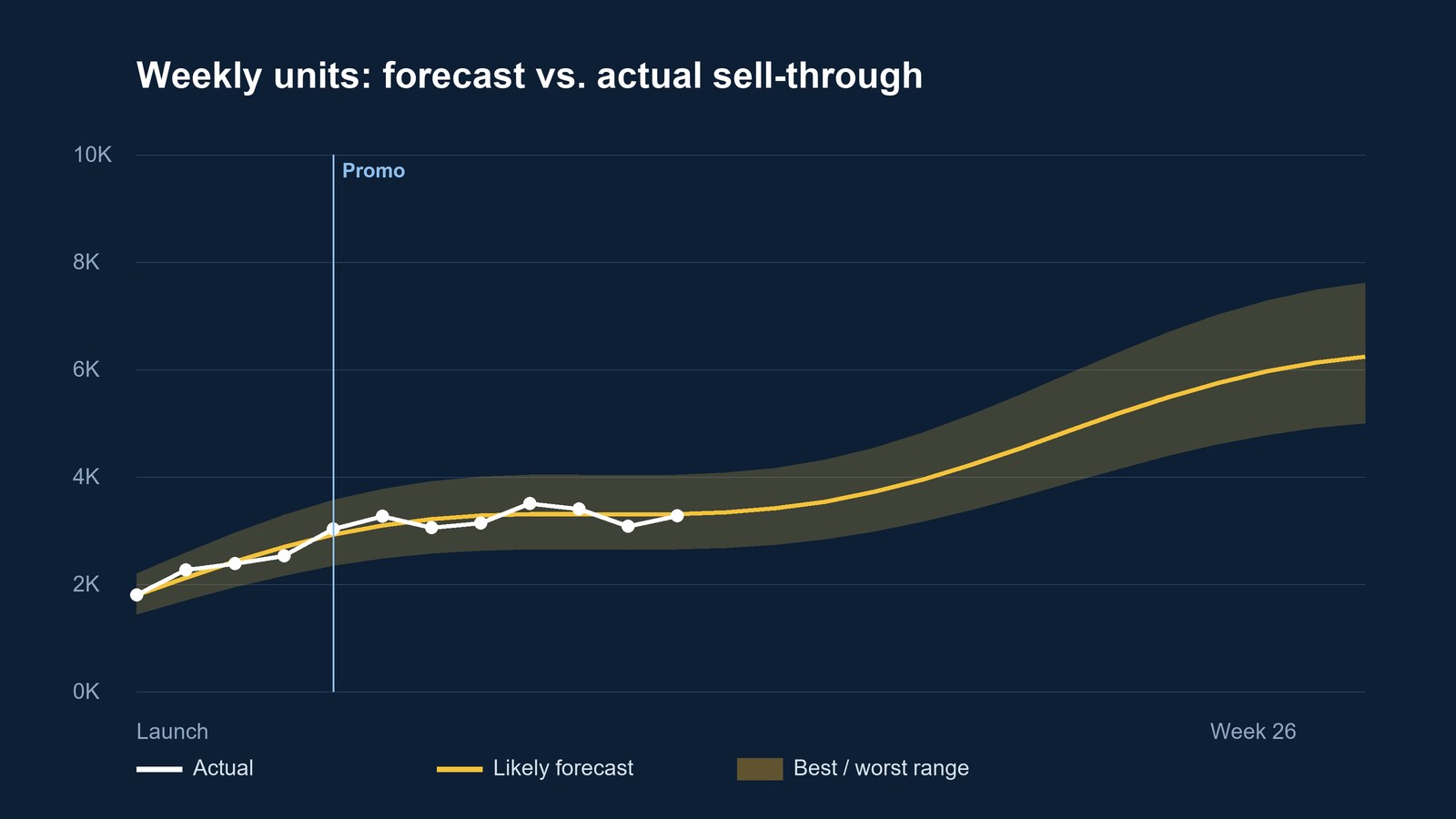
Forecasts go stale the week you finish them. AI models can refresh a forecast as new weekly sales, promotions and seasonality come in, and show a best, likely and worst case instead of one number you hope is right. That matters in retail, where a missed forecast means either empty shelves or cash tied up in inventory. Our finance lead, Ysa Mayorca, writes about the fundamentals in her forecasting piece. AI makes those fundamentals faster to maintain, not optional.
3. Understanding the market landscape
Before you pitch a category, you need to know who is already on the shelf, at what price, with what claims and how shoppers rate them. AI research tools can scan retailer sites, marketplaces and review platforms and turn that into a clear competitive map in hours: price bands, pack sizes, gaps in the assortment and the complaints competitors keep getting. Those complaints are often your pitch.
4. Sharper conversations with buyers
Buyers are busy and specific. AI can help you prepare for the meeting you are about to have, not a generic one: a brief on the retailer’s category strategy, recent resets, the questions that buyer is likely to ask and the data you need ready to answer them. After the meeting, it can turn your notes into a clean follow-up with next steps. Faster, more precise follow-up is one of the simplest ways to stand out.
5. Leading your category
Category leaders tend to be the brands that notice change first. AI monitoring can alert you when a competitor launches a new item, when a new brand starts gaining reviews quickly or when shopper language in a category shifts. Seeing those signals early lets you bring the buyer a point of view, which is exactly how brands become the partner a retailer calls first.
6. Price scoping that keeps your retail partners competitive
Few things damage a retail relationship faster than a retailer discovering your product is cheaper somewhere else. AI price-monitoring tools track your items and close competitors across retailer sites and marketplaces, flag listings below your minimum advertised price and model how a price change affects your margin and the retailer’s. Keeping pricing consistent protects the partnership and your brand.
7. Protecting your product and intellectual property
Once a product sells well, copies follow. AI tools can scan marketplaces for listings that reuse your images, your product claims or a design that looks a lot like yours, and flag possible trademark conflicts early. The tool finds and organizes the evidence. Your IP attorney decides what to do with it, so you can act quickly instead of learning about a knockoff from a customer review.
8. Keeping up with promotional activity
Promotions drive a large share of retail volume, and competitor promotions can quietly eat yours. AI tracking can log who is on promotion, at what depth, in which retailers and for how long. That history helps you plan your own promotional calendar with the buyer and explain a soft week before anyone has to ask.
What AI will not do for you
AI is only as good as the data you give it and the questions you ask. It can be confidently wrong, so anything that goes to a buyer, an investor or a lawyer should be checked by a person. It also cannot build the relationship. Buyers still work with people they trust, and that part of the job stays yours.
Where to start
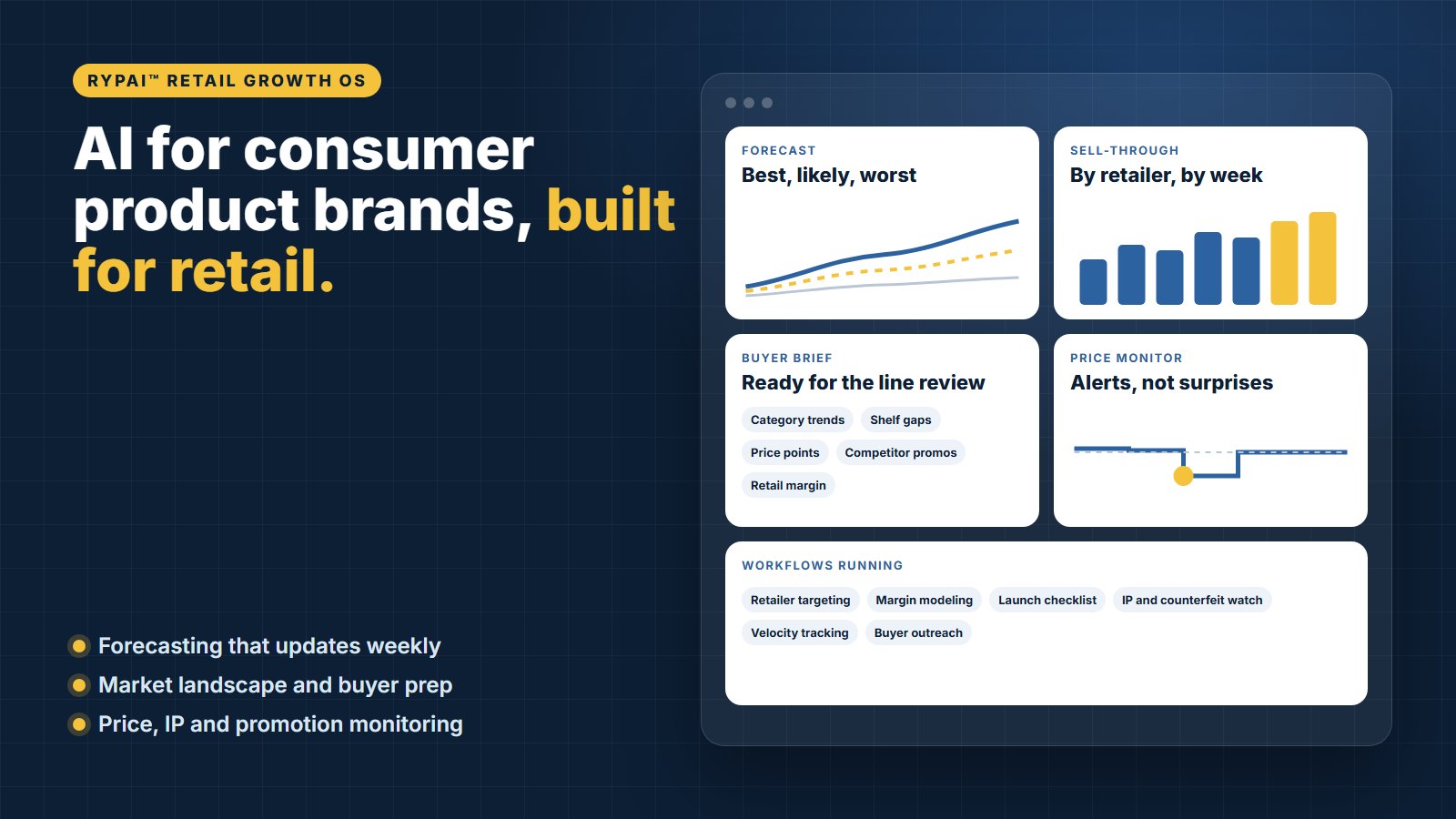
Pick the one task that eats the most of your week, whether that is competitor research, price checks or meeting prep, and start there. This matters most for DTC and Amazon brands moving into retail. A CPG brand that walks into a Walmart or Target line review with clean numbers on velocity, retail margin and wholesale pricing gets a very different conversation with the retail buyer. You do not need to build these systems from scratch. At Rock Your Product®, the RYPAI™ Retail Growth OS already covers research, retailer targeting, margin modeling, buyer briefs, launch workflows and velocity tracking, and our team keeps building new tools made specifically for consumer product brands. Every ROS Amplify™ member and 1:1 Advisory client gets the full suite, alongside Korie Minkus and a team that has helped consumer product brands get into retail and keep growing there.