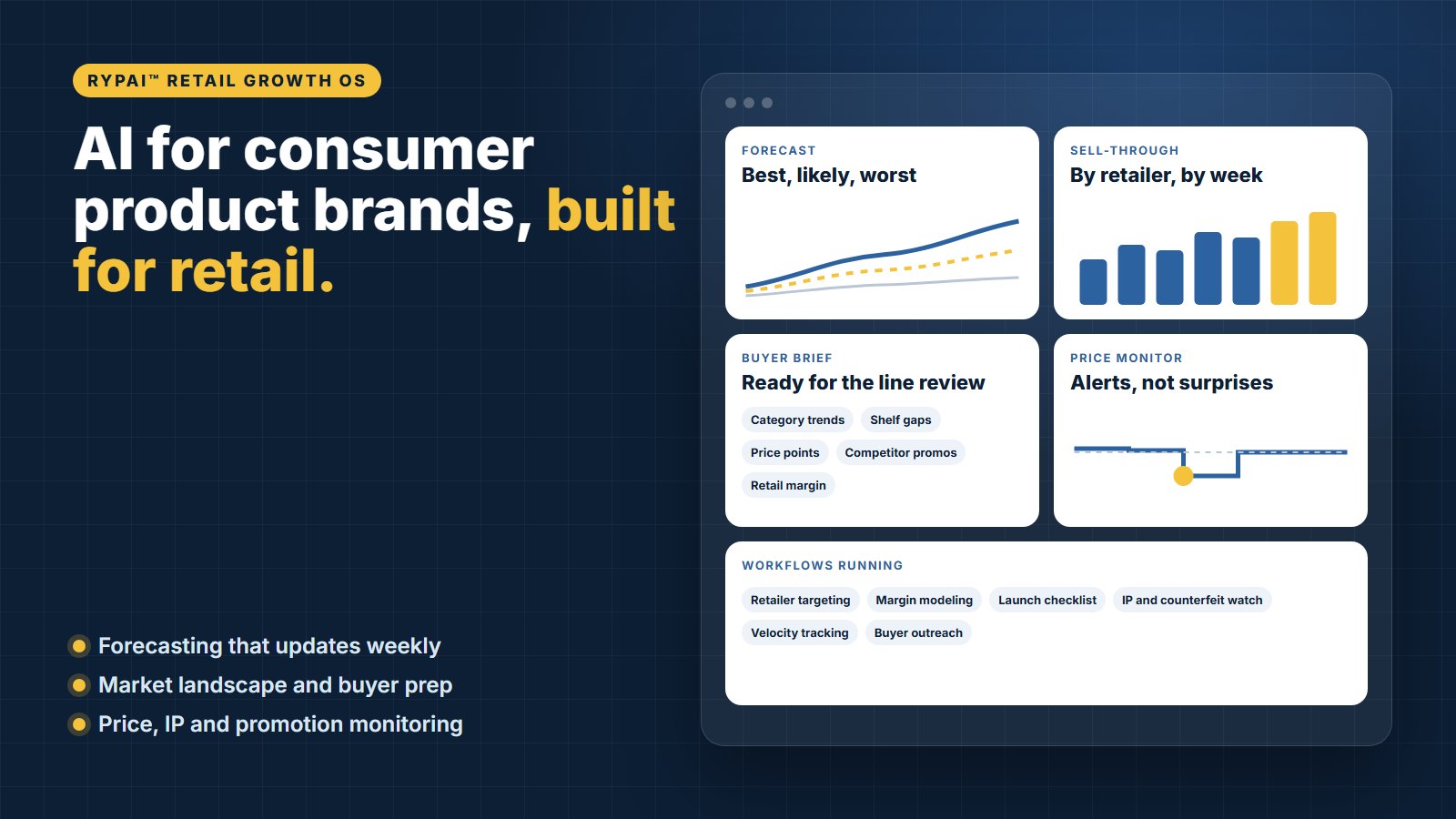
In more than 30 years in consumer packaged goods, I have watched great products get pulled from shelves for one reason more than any other: the numbers behind them were not real. The product was good. The forecast was a wish. A grounded forecast is not about being perfectly right. It is about knowing what has to be true for the plan to work, and knowing early when it is not.
Start with rate of sale, not the purchase order
Retail runs on rate of sale, or ROS: how many units sell per store, per week. Everything else follows from it. The basic math is simple:
Weekly units = stores × units per store per week
If you launch in 500 stores and sell 2 units per store per week, that is 1,000 units a week and about 52,000 units a year. Build your plan on a realistic ROS, and use your online data, comparable brands in the category and the buyer’s own expectations to set it. A buyer will usually tell you the rate the category needs to justify your space. Plan for that number and a lower one.
Separate sell-in from sell-through
Your first purchase order is not demand. It is the retailer filling the pipeline: stocking every shelf plus the warehouses behind them. That initial fill can be several weeks of inventory in one shipment. If you treat it like your new normal, you will overbuild inventory and misread the business. Forecast the pipeline fill once, then forecast replenishment from actual sell-through.
Plan promotions into the forecast
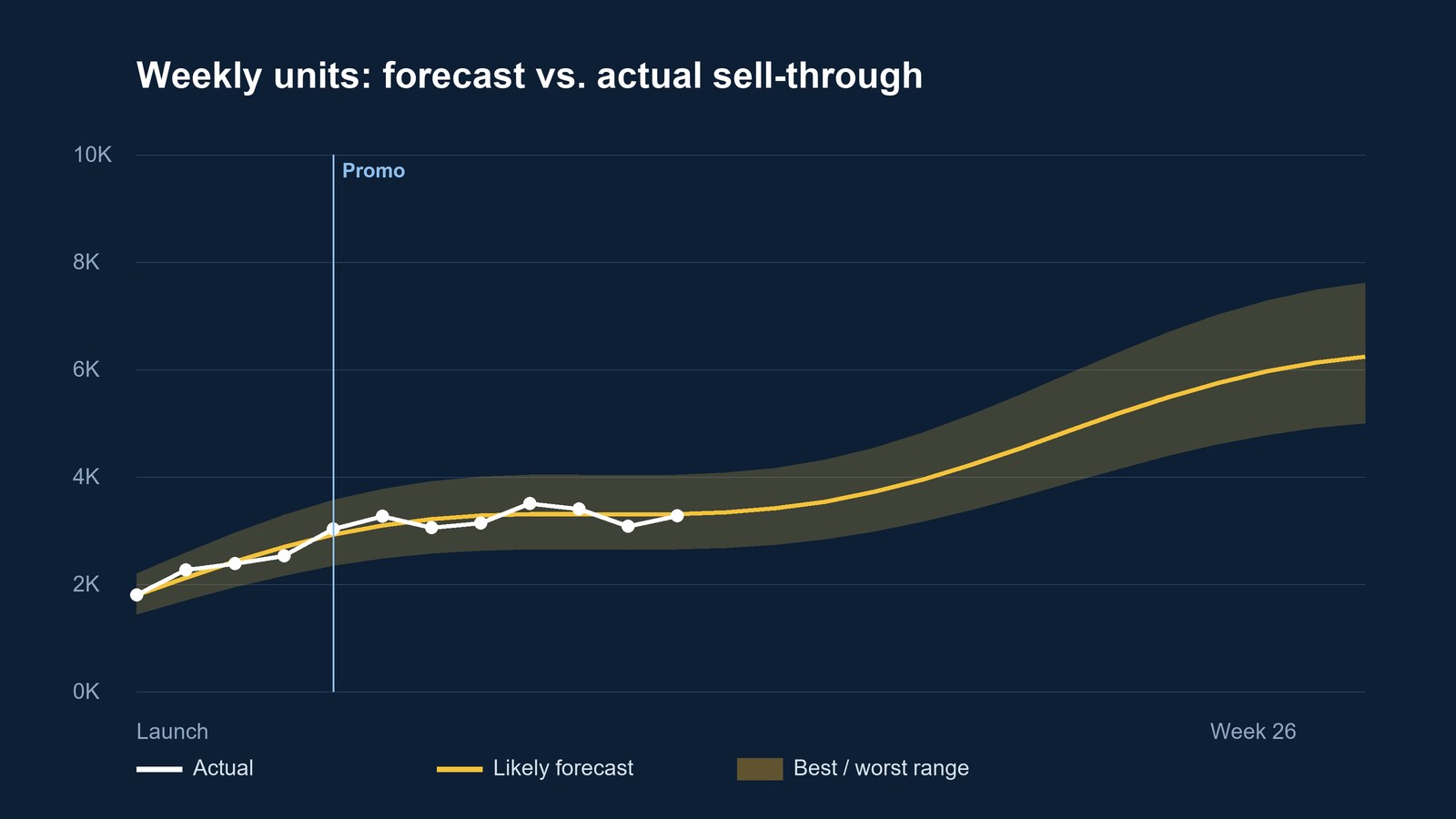
Promotions can double or triple weekly volume for a short window, and the week after is often softer as shoppers stocked up. Build your promotional calendar with the buyer and put each event in the forecast with its own lift and its own cost: the discount, any retailer fees and the extra freight. A promotion that sells a lot of units at a loss is still a loss.
Respect lead times and safety stock
Work backward from the date product must be in the retailer’s distribution center. Add manufacturing time, raw material lead time, freight and receiving. Then carry safety stock for the weeks you might be wrong. Running out of stock during a launch window hurts twice: you lose the sales, and the retailer sees a weak rate of sale that was really a supply problem.
Forecast the cash, not just the units
Retail pays later than online. Many retailers pay on terms of 30 to 90 days, and deductions for promotions, damages or compliance issues come out of those payments. Meanwhile you paid your manufacturer weeks or months before. Map when cash goes out and when it comes back for the first year, and make sure the business can fund the gap. Plenty of brands have been hurt by a big order they could not finance.
Where brands typically fail
- Treating the first order as demand. The pipeline fill looks like success, reorders come in lighter, and the brand is stuck with inventory.
- One forecast instead of three. Build a best, likely and worst case, and know what you would do in each before you need to.
- Pricing for the website. After retailer margin, trade spend, freight and deductions, a price that worked online can leave nothing. Model the full retail P&L first.
- No plan for slow movers. Retailers review performance, often within a few months. If an item lags, have a plan for promotion, placement or replacement ready.
- Ignoring the cash gap. Units can look great while the bank account empties. Forecast cash with the same care as sales.
How to build a forecast a buyer will trust
Show your assumptions openly: store count, ROS, promotional lift, seasonality and the online history behind them. Tie them to data the buyer recognizes. Update the forecast every week once you launch, compare it to actual sell-through and explain the gaps. Buyers do not expect perfect forecasts. They expect partners who know their numbers and react quickly.
You do not have to do it alone
Whether you are a DTC or Amazon brand preparing your first retail buyer pitch or a CPG brand already on shelf at Walmart, Target or Walgreens, the forecast is where retail growth is won or lost. At Rock Your Product®, we build retail P&Ls, pricing and forecast models with our brands before the first buyer meeting, and keep them current as the business grows. Our RYPAI™ tools make it faster to refresh the numbers, and our team makes sure the numbers hold up in the room. If you want your next retail conversation to be backed by a plan you believe in, start the conversation. Korie Minkus and our team work with consumer product brands through ROS Amplify™, our retail growth membership, and 1:1 Advisory.