For about a decade, the story founders heard was that stores were dying and the future was direct-to-consumer. I never believed it, and the numbers never supported it. According to the U.S. Census Bureau, more than 8 of every 10 U.S. retail dollars are still spent offline. What changed is the order of operations. The smartest consumer product brands now prove demand online, then use that proof to earn the shelf.
I have spent more than 25 years on the corporate side of consumer products and nearly a decade helping founders make this exact move. Here is what I see happening, three brands that show how it is done, and what it means for you.
Online is the proving ground. Retail is the multiplier.
Selling online teaches you things no focus group can: who buys, how often, at what price and why they come back. That data used to be a nice-to-have. Today it is the price of admission. Buyers at Walmart, Target, Sephora and Walgreens want to see proven velocity before they commit shelf space, and a brand with real online traction walks into a line review with evidence instead of hope.
Retail then does something online rarely can at the same cost. It puts your product in front of shoppers who were never going to click your ad, and it ships by the case pack instead of one order at a time. Digital creates attention. Retail creates scale. The brands winning right now are running both.
Three brands that built the path
1. Glossier: from a beauty blog to Sephora’s top fragrance
Glossier was the poster child for direct-to-consumer beauty. In February 2023 it made its first wholesale move, launching in about 600 Sephora stores across the United States and Canada. Glossier told WWD it beat its Sephora launch forecast by more than 100 percent and was on track for roughly $100 million in first-year sales there. Its $68 fragrance, Glossier You, became the top-selling fragrance at Sephora in stores and online.
The lesson: Glossier did not go wholesale to rescue a weak brand. It went with a loyal community and a hero product already proven online, then picked a retail partner whose shopper matched its own.
2. Olipop: letting velocity do the selling
Olipop started as a better-for-you soda sold heavily online and in a handful of independent stores. As its rate of sale proved out, it expanded into mass retail. The company now reports distribution in close to 50,000 U.S. doors, including Walmart, Target, Kroger, Whole Foods and Costco. Revenue roughly doubled from about $200 million in 2023 to about $400 million in 2024, and the brand was valued at $1.85 billion in its 2025 funding round.
The lesson: Olipop grew door by door, earning each expansion with sell-through data. Buyers kept adding space because the product kept moving.
3. Dr. Squatch: from viral ads to a $1.5 billion exit
Dr. Squatch built a men’s natural soap brand on famously funny online video and a subscription business. Walmart became its first retail partner, and the brand later added Target and other major retailers. In 2025 Unilever agreed to acquire Dr. Squatch for $1.5 billion, and the deal closed that November.
The lesson: Retail distribution did not replace the direct business. It broadened the brand’s reach and made it far more valuable to a strategic buyer. Proven retail distribution is exactly what acquirers look for.
What these brands had in common
- A proven hero product. Each one led with the item that already sold online, not the whole catalog.
- Data in hand. They walked into buyer meetings with sales history, repeat rates and reviews.
- Economics that worked at wholesale. Retail margin, trade spend and freight were modeled before the first purchase order, not after.
- Channel fit. They chose retailers whose shoppers looked like their online customers.
- Both channels, working together. Online kept building awareness while stores captured the purchase.
Where brands get it wrong
The mistakes I see most often are not about the product. They are about readiness. Brands say yes to a big order before they can fund the inventory. They price for their website and discover there is nothing left after the retailer’s margin. They land on shelf with no plan to drive sell-through, and the product gets cut at the next review. Getting on the shelf is the first half of the work. Staying there is the second.
What this means for your brand
If you are doing between $1 million and $50 million online and you have not built a retail plan, you are leaving the largest part of the market to someone else. The good news is that you have already done the hardest part. You proved people want what you make. For DTC and marketplace brands, retail readiness is the next step in an omnichannel growth strategy, and the retail buyer is looking for exactly the proof you already have. Now it is time to learn the retail operating system: the pricing, the pitch, the partners and the execution that turn one channel into a multiplier.
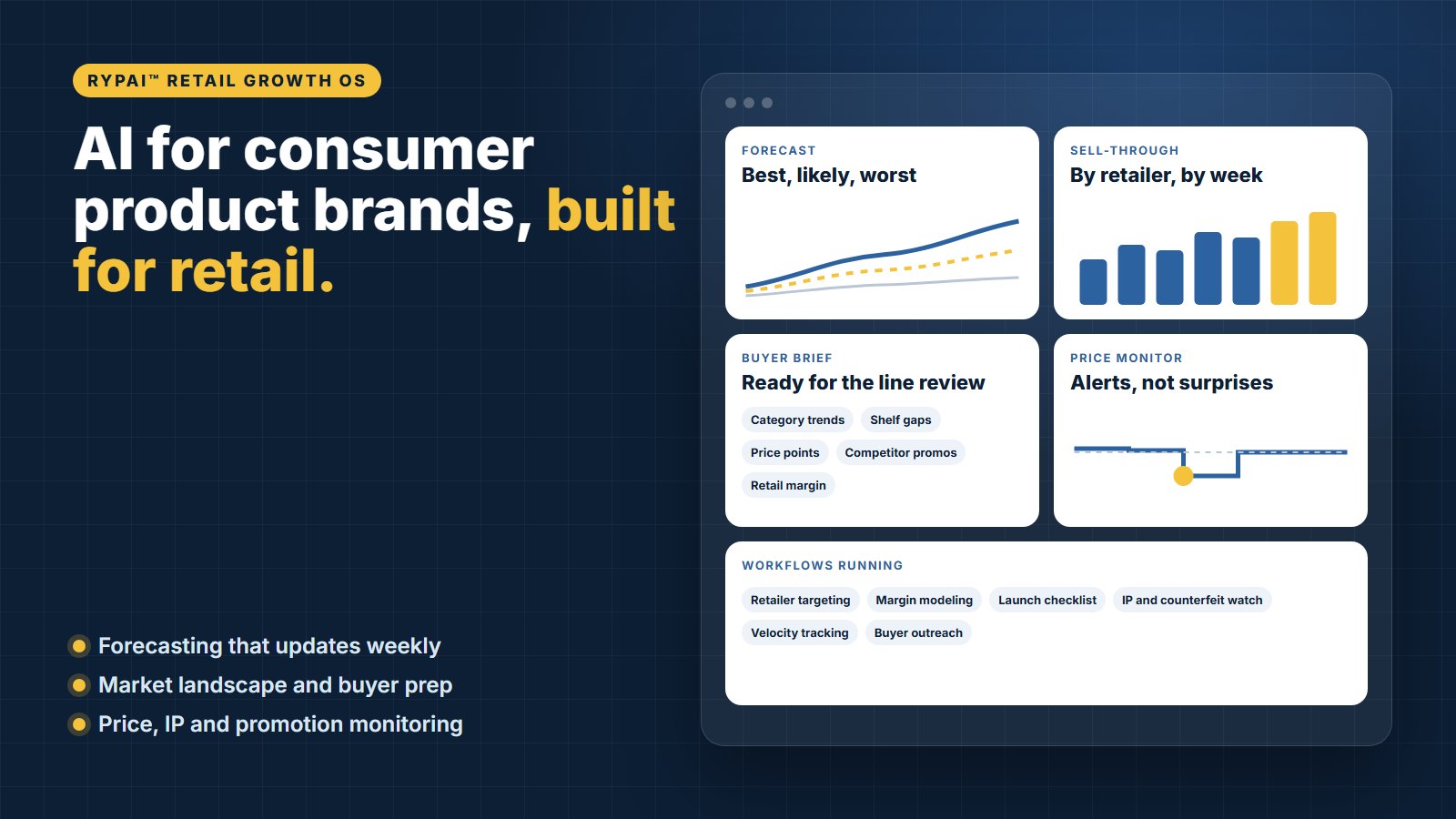
That is the work we do every day at Rock Your Product®, through ROS Amplify™, our retail growth membership, and 1:1 Advisory, with the RYPAI™ AI tools built for CPG brands behind both.
Sources: U.S. Census Bureau quarterly retail e-commerce sales (Q2 2026); Glossier launch in Sephora US and Canada; WWD, Glossier Talks Numbers, Sephora and Beyond; Food Dive on Olipop’s valuation; Olipop company overview; Dr. Squatch enters Walmart; Unilever to acquire Dr. Squatch.